
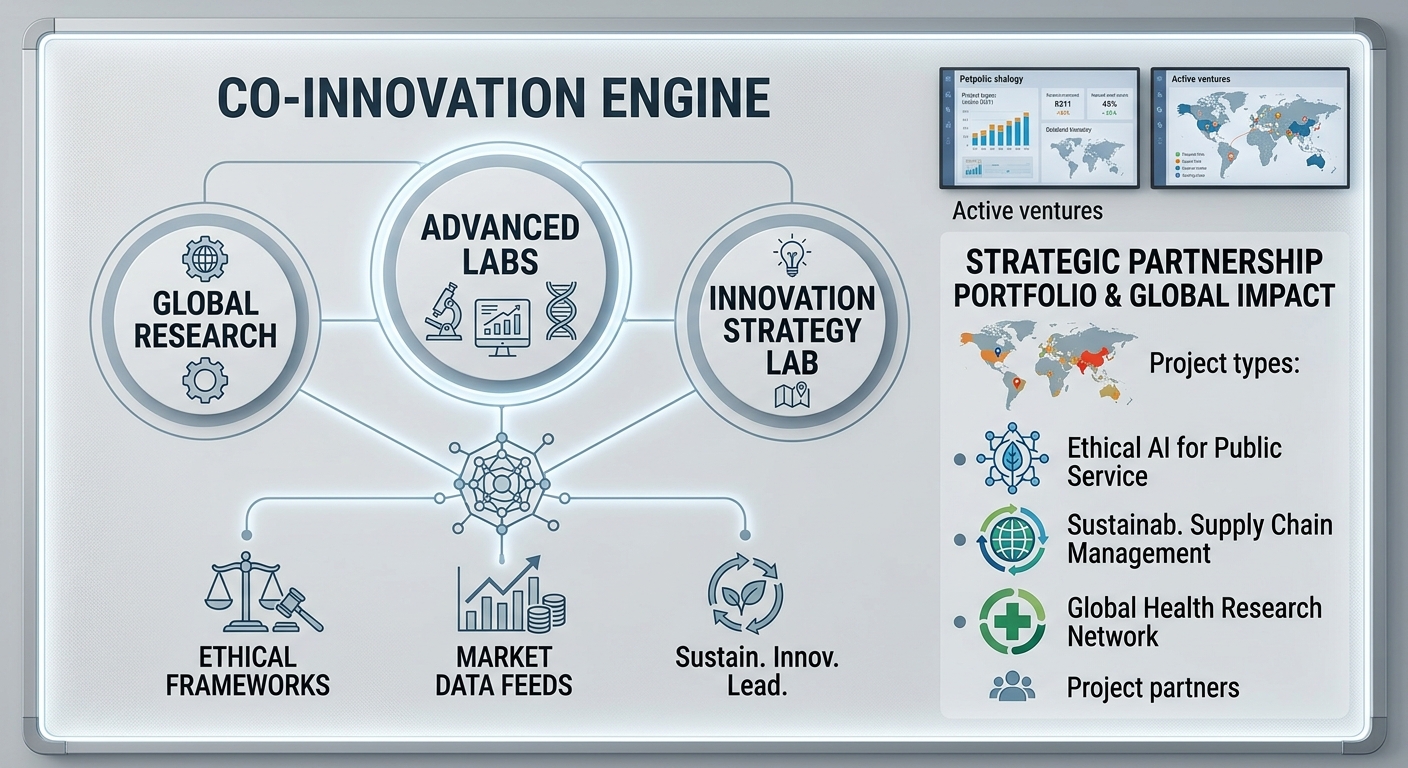
Connecting Research, Education and Industry
The Innovative Management Department promotes an applied approach to education and research by connecting academic knowledge with the realities of business and management practice.
Our research and partnership activities bring together faculty, students, businesses, industry professionals, and other stakeholders to address contemporary management challenges, develop practical solutions, and strengthen the connection between university and industry.
Research & Innovation
Research is an important component of the Department's academic culture. Faculty members conduct research across a broad range of management-related areas, including:
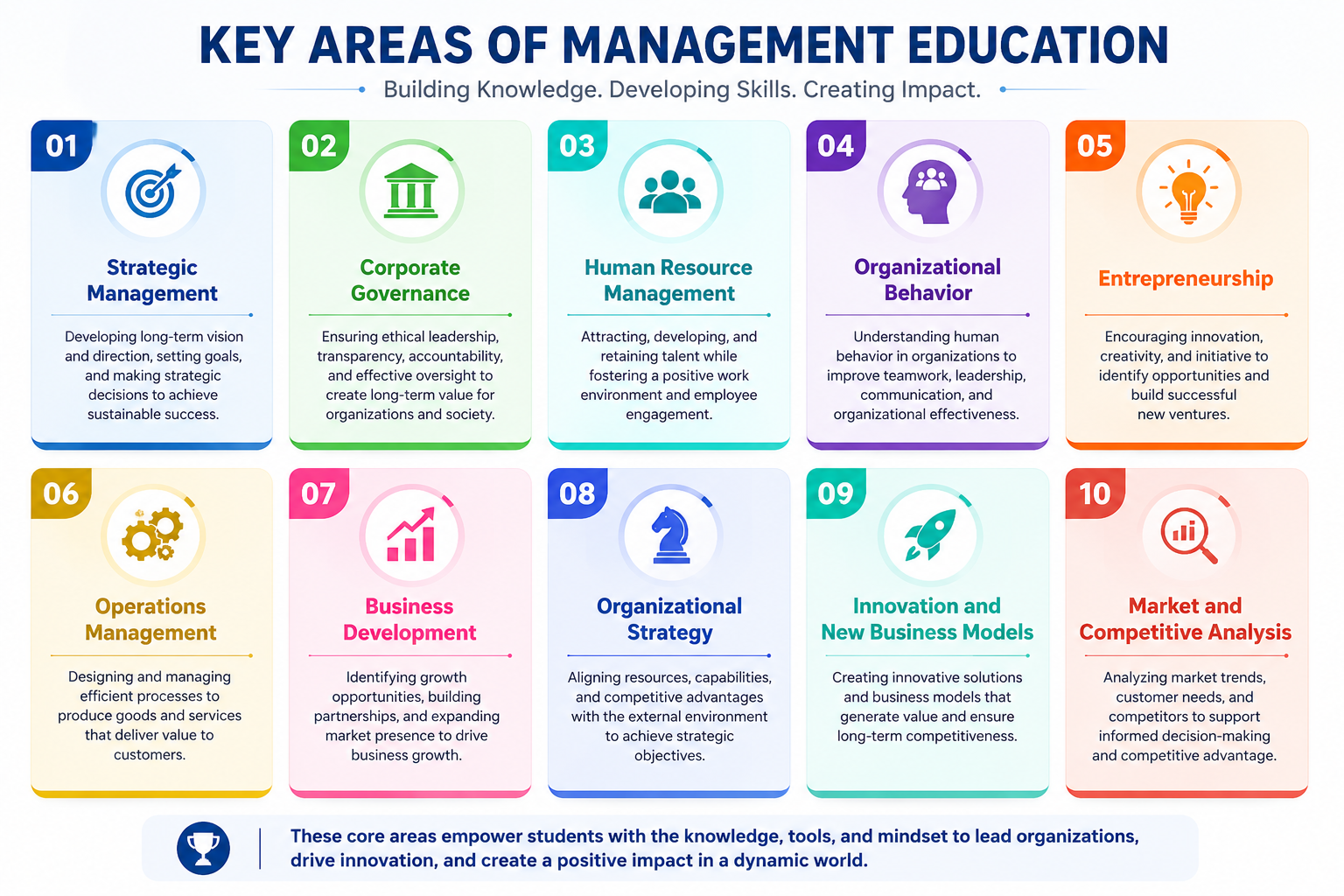
The Department seeks to integrate research findings into teaching and curriculum development, ensuring that students are exposed to current management concepts, evidence-based decision-making, and emerging business practices. The Department's vision specifically emphasizes the role of research in informing curriculum and teaching strategies.
Research Centres & Laboratories
The Department is developing an environment where research, practical learning, and innovation can take place in close interaction with business and industry.
Research and applied learning activities can support:
Management Research
Research into organizational performance, leadership, strategy, human capital, and management practices.
Business Analytics & Decision-Making
Application of quantitative and qualitative methods to real management and business problems.
Entrepreneurship & Innovation
Development and testing of new business models, entrepreneurial ideas, and innovative management solutions.
Organizational Development
Research and practical projects focused on organizational structures, human resources, business processes, and organizational effectiveness.
Research in Practice
Our approach is built around a simple principle: research should not remain in the classroom or academic publications — it should contribute to solving real organizational and business challenges.
Industry Partnerships
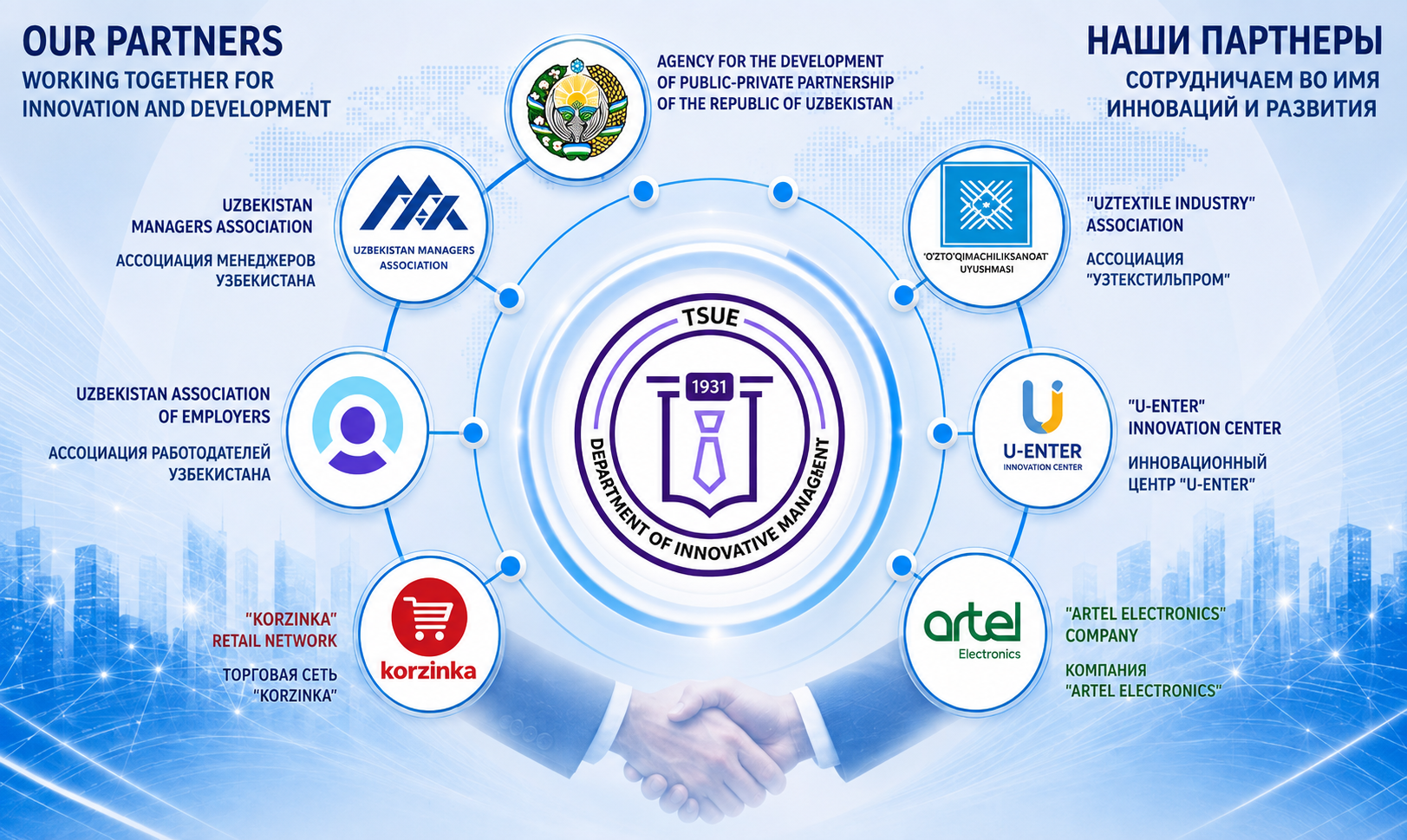
The Department maintains partnerships with organizations across different sectors of the economy. These partnerships support internships, guest lectures, master classes, curriculum development, professional networking, and knowledge exchange.
These relationships provide opportunities for students and faculty to engage directly with professional practice and for external stakeholders to contribute to the development of academic programs.
Department Branches in the Real Sector
Bringing the Department Closer to Business
One of the Department's distinctive approaches to strengthening university–industry cooperation is the establishment of Department branches within real-sector organizations.
These branches create a direct interface between the academic environment and the workplace, allowing students and faculty to engage with real organizational processes, management challenges, and industry practices.
Through this model, the Department aims to:
- bring practical business experience into the educational process;
- provide students with opportunities for workplace-based learning;
- strengthen internship and employment pathways;
- facilitate joint research and applied projects;
- involve industry professionals in teaching and mentoring;
- identify real business challenges for academic research;
- support curriculum development based on labor-market needs;
- create long-term university–industry partnerships.
From Campus to Company
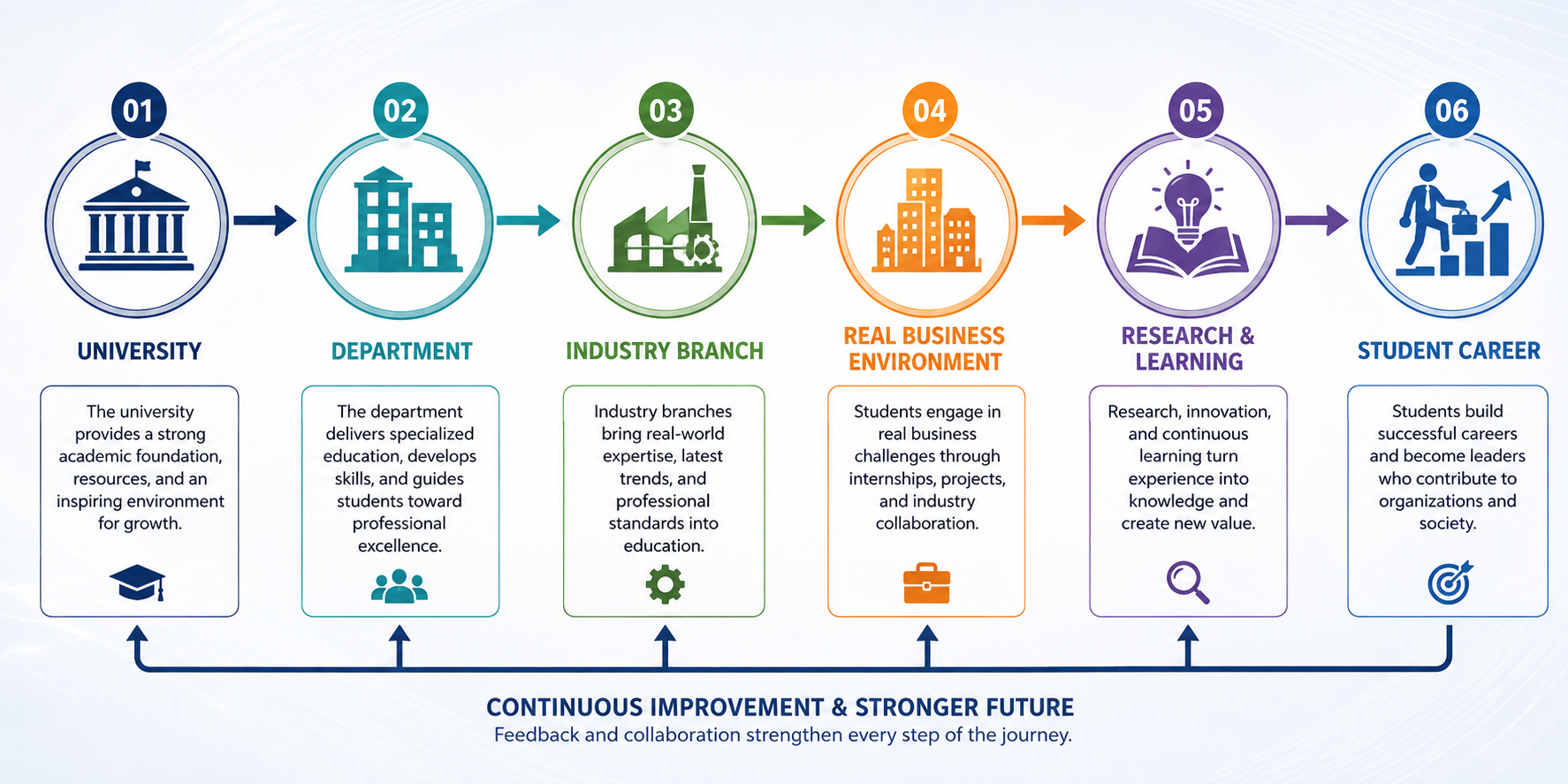
Partnership in Action
Our partnership model goes beyond traditional cooperation agreements. Industry partners can participate in the academic ecosystem through:
01 — Internships
Students gain practical experience in real organizational environments.
02 — Guest Lectures
Industry professionals share practical knowledge and current business experience.
03 — Master Classes
Students work with practitioners on contemporary management challenges.
04 — Joint Research
Faculty and industry partners can collaborate on applied research and organizational problems.
05 — Curriculum Development
Industry perspectives help ensure that academic content remains relevant to labor-market expectations.
06 — Professional Networking
Students gain opportunities to build connections with potential employers and professional communities.